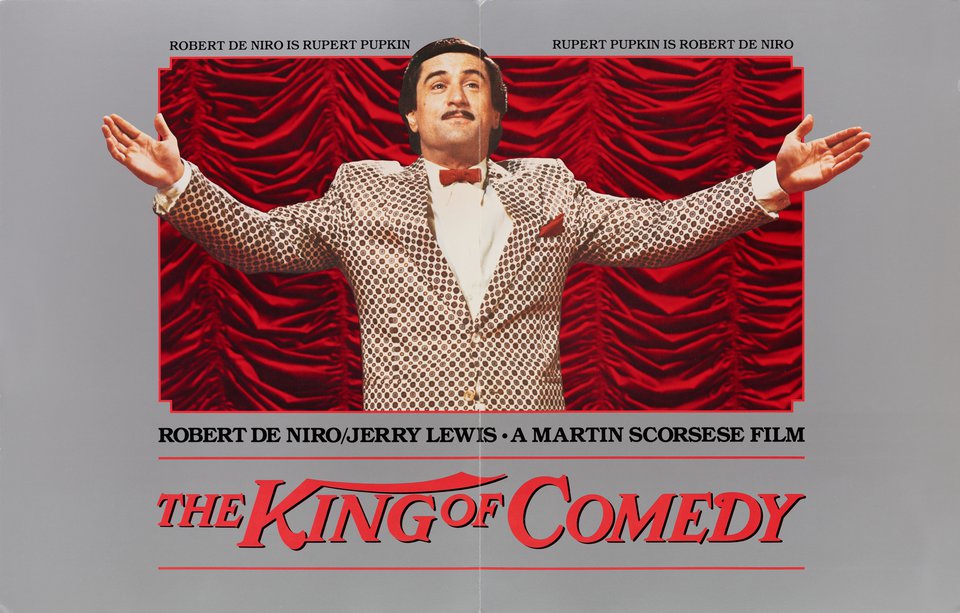
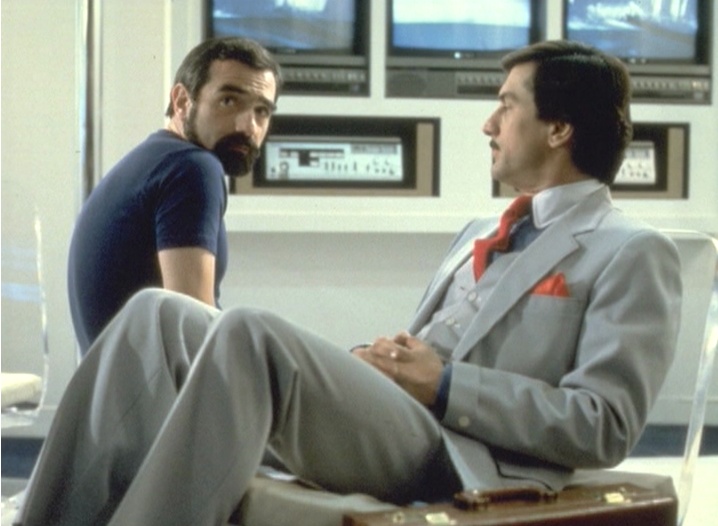
Martin Scorsese’s The King of Comedy (1983) details the story of an aspiring and struggling standup comedian, Rupert Pupkin (Robert DeNiro), who is enamored with New York City’s biggest and most successful comic – the host of a late-night television show, Jerry Langford (Jerry Lewis). As the film unravels, the audience sees that Pupkin isn’t just a fan, but rather a crazed stalker who truly believes he and Langford would be best pals if he were just given a chance. As the film continues, Rupert Pupkin goes from having imaginary conversations with a cardboard cutout of Langford, to obnoxiously waiting for the celebrity in his office’s reception, to eventually showing up at Langford’s vacation home. Unannounced. With a date. Pupkin and his fellow Langford-obsessed-stalker friend Masha (Sandra Bernhard) – who is so insane she makes Rupert seem somewhat normal – eventually come up with a plan to kidnap Jerry Langford, and call in a ransom to the studio demanding that they begin the next late-night show with Pupkin doing his monologue live on the air. If not, Langford will be killed. The studio complies. The monologue airs. Langford gets home safe. And Rupert Pupkin goes to prison, only to come out a millionaire with his own talk show – thanks to the people who hear about his story and become fans.
Robert De Niro’s portrayal of the somewhat pitiable Rupert Pupkin is truly one of his best. The opening scene where he repeatedly tries to revive the conversation with Jerry Langford during their goodbye had me cringing in my seat – desperately wanting to look away. That to me, is true horror. In the first act, I did feel bad for Pupkin, somewhat. He repeatedly gets into conversations and confrontations where we can tell that his confident bravado exterior is really a mask for his true personality – a shy man attempting to break out of his shell. As the second act gets underway and he begins to be disillusioned in how showbiz works and with his imaginary relationship with Jerry Langford, I found myself becoming incredibly annoyed with the character. Pupkin wanted everything handed to him. He wasn’t even working the clubs yet, but he expected to be put on late-night television. From what I understand about being a standup comic, it takes years and years, sometimes decades of working these shitty clubs and road gigs before one catches their “big break” and that’s if they’re fortunate enough to receive one. When it’s revealed that Pupkin gets out of prison and is instantly given his own late-night show, along with a published biography and over a million dollars, the viewer can’t help but feel that Pupkin won. He did the lazy man clichès. He worked smarter, not harder. It wasn’t about what he knew, but who he knew. Pupkin did less than three years in a minimum security prison and in turn, he became more successful than 99.9% of comedians who work their asses off via the “conventional route”. The scumbag who does wrong yet winds up being ok, becoming somewhat of a cult hero in the process is a common theme of Martin Scorsese. Just see The Wolf of Wall Street (2013), Goodfellas (1990), and Taxi Driver (1976). Personally, I don’t think this is Scorsese’s personal belief or anything, but rather a commentary on how he views the common fan of media. That we idolize the wrong people and give platforms to those who do not deserve it. The perfect example of this is Jordan Belfort from the aforementioned Wolf of Wall Street. We all saw how shitty he was throughout that film – yet after just 22 months in prison, Belfort now has 2.2 million Instagram followers, a successful podcast, and a reported $20M net worth.
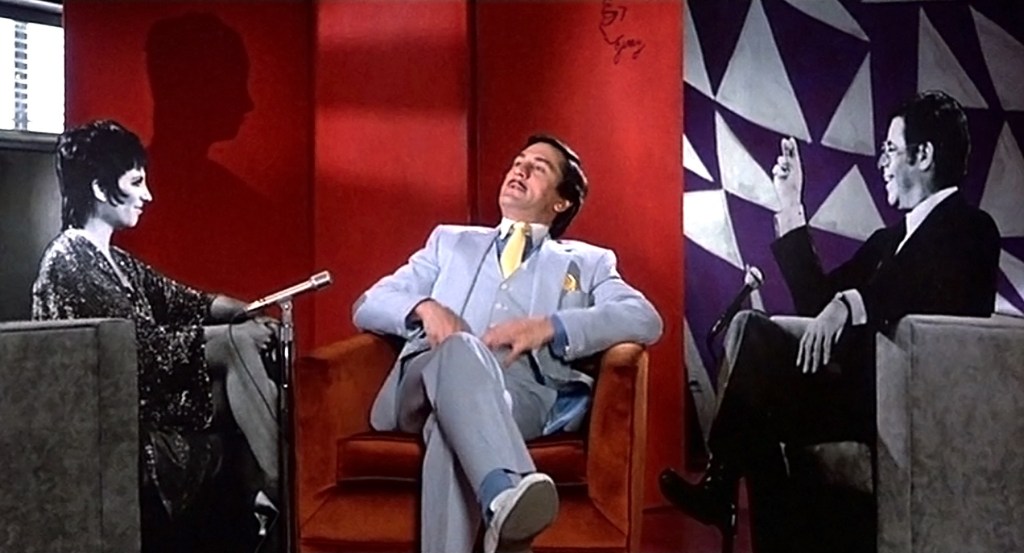
The film’s main theme is centralized around the idea of everyday people being obsessed with celebrities. Today this is more prevalent than ever. It seems that there are more celebrities than there ever have been – from star athletes to talented musicians, to Hollywood actors/actresses, and even social media influencers. Personally, I think another reason why celebrity idealization is more prevalent than ever is because of how available these celebs have become to everyday people. Back in the ’60s/’70s, it was rare to see a genuine celebrity interview. Some of this era’s biggest stars like Hendrix, Nicholson, and Led Zeppelin rarely gave accessible interviews. Today in the age of social media, late-night talk shows, and celebrity podcasts, famous people have become infinitely more accessible – making them more ‘attractive’ to us everyday people. This is a big reason why The King of Comedy was ahead of its time and is perhaps an insight into why the film was arguably Scorsese’s biggest flop – making $2.5M on an $18M budget. This crazy fan fiasco wasn’t as prevalent at the time. Moreover, the film was eviscerated by critics and was even labeled “The Flop of the Year [1983]’ by Entertainment Tonight. However today it is highly received by the current generation of moviegoers, averaging a 4.2-star rating on Letterboxd, the 224th highest rating for a feature-length film on the website. Furthermore, when most people think of a Scorsese/De Niro collab, they often think of Taxi Driver (1976), Raging Bull (1981), or Goodfellas (1990), but rarely is the comedy/drama story of the truly pathetic and embarrassing Rupert Pupkin mentioned – making it their most underrated collab.
Also, after watching both The King of Comedy and Taxi Driver, it really puts into perspective just how unoriginal and honestly boring Joker (2019) was.
AWARDS:
MVP Award – Robert De Niro (Rupert Pupkin)
Best Scene Award – Rupert Pupkin’s late-night television monologue
Best Halloween Outfit (The Marty McFly Award) – Rupert Pupkin’s suit during his monologue, with the moustache of course.
Best Quote (The “I never had any friends later on like the ones I had when I was twelve. Jesus, does anyone?” Award) – “Better to be king for a night than schmuck for a lifetime” – Rupert Pupkin

 TalkingFilmTalkingSports
Leave a comment